Why Pools Turn Green So Fast in South Florida
If you own a pool in Boca Raton, you already know how quickly water can change when the weather shifts, the sun is intense, or a storm rolls through. A pool that looked clear on Monday can start turning cloudy or green by the weekend. For many Boca Raton pool owners, that speed is frustrating, but it usually comes down to a few predictable factors: heat, heavy rainfall, strong sunlight, poor circulation, and chemical imbalance.
South Florida pool care is different from pool care in many other parts of the country. The combination of year-round heat, frequent afternoon rain, humidity, and organic debris creates ideal conditions for algae growth. Once algae gets a foothold, it can spread fast, especially if the filter, sanitizer level, or pump schedule is not keeping up. Understanding why this happens can help you prevent problems before they become a full green-pool cleanup.
At Boca Pool Servicing, we help homeowners stay ahead of these issues with practical pool maintenance in Boca Raton, regular water testing, equipment checks, and dependable weekly service. Below, we’ll explain why pools turn green so quickly in South Florida and what you can do to reduce the risk.
Why South Florida Pools Turn Green So Fast
Green pool water is usually caused by algae growth, and South Florida’s climate makes algae much easier to develop. Warm water speeds up algae reproduction, sunlight encourages growth, and rain can dilute sanitizer levels while adding dirt, pollen, and nutrients that algae feed on.
1. Warm Water Gives Algae a Head Start
Algae grows faster in warm water. In Boca Raton, pool water can stay warm for much of the year, which means algae does not have a long off-season. Even a small drop in chlorine or a short period of poor circulation can create the right conditions for an algae bloom.
2. Sunlight Breaks Down Sanitizer
Strong Florida sun can reduce chlorine effectiveness quickly, especially if cyanuric acid levels are too low or too high. Without enough protection and balance, sanitizer burns off faster, leaving the pool vulnerable. This is one reason pools that seem fine in the morning can look off by the end of the day.
3. Rainwater Dilutes Pool Chemistry
Heavy rain does more than just add water to the pool. It can wash in debris, disturb chemical balance, and lower sanitizer concentration. Storm runoff can also bring in organic material such as leaves, soil, and plant matter, which creates more food for algae.
4. Poor Circulation Lets Dead Spots Form
Algae often starts in areas where water does not move well, such as corners, steps, shaded edges, behind ladders, or near return lines with weak flow. If your pump is not running long enough, the filter is dirty, or the system has a circulation issue, algae can take hold in those low-movement areas first.
5. Organic Debris Feeds Growth
South Florida landscapes are beautiful, but they also add a lot of debris to pools. Leaves, palm fronds, pollen, insects, and grass clippings can all introduce nutrients that help algae grow. If debris sits in the water or skimmer basket too long, it can become part of the problem.
Common Water Chemistry Issues That Lead to Green Pools
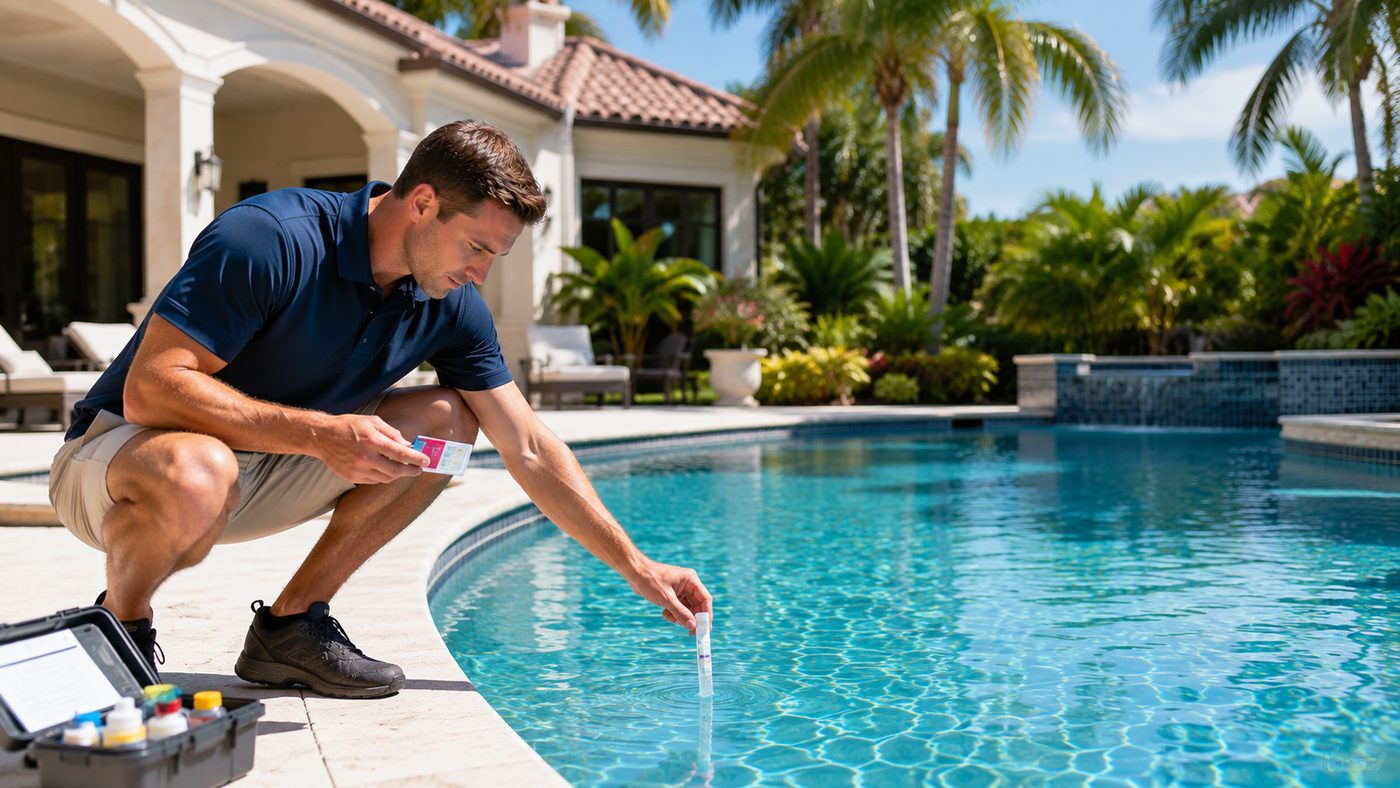
Green water is often a symptom of chemistry that has drifted out of balance. Even a pool that appears clear can be one bad test away from turning. Proper water chemistry is one of the most important parts of pool maintenance in Boca Raton.
Low Chlorine
Chlorine is the primary sanitizer in most residential pools. When chlorine is too low, bacteria and algae can multiply quickly. A pool may look fine one day and begin to haze over the next if sanitizer levels are not maintained.
Improper pH
If pH is too high, chlorine becomes less effective. If pH is too low, the water can become corrosive and uncomfortable. Balanced pH helps sanitizer work the way it should and supports overall water clarity.
Unstable Cyanuric Acid
Cyanuric acid helps protect chlorine from being burned off by the sun, but too much can reduce chlorine effectiveness. In South Florida, this balance matters a lot because of intense UV exposure. Testing and adjusting it regularly helps prevent sanitizer loss and algae growth.
High Phosphates and Organic Load
Phosphates and other organic contaminants do not directly create algae, but they can support rapid growth when sanitizer levels drop. After storms, heavy bather use, or long periods without proper cleaning, these contaminants can build up and make a green pool more likely.
Why Storm Season Makes Pool Problems Worse
Storm season is one of the biggest reasons pools in Boca Raton can turn green so quickly. Afternoon thunderstorms, tropical systems, and windy weather all create extra maintenance challenges.
Storms Add Debris and Dilute Water Chemistry
Rainwater can alter your pool’s chemical balance, while wind brings in leaves, dirt, and pollen. Even if the pool still looks clear after a storm, the added organic material and dilution can create problems within days.
Power Outages and Pump Interruptions Matter
If a storm knocks out power, your pump and filtration system may stop running. Even a short interruption can reduce circulation and allow algae to begin spreading, especially during hot weather. Once the system comes back online, it may take more than just normal filtration to recover the water.
Flooding and Surface Runoff Are a Concern
In some cases, stormwater runoff can introduce contaminants from nearby landscaping or hardscape areas. If water level rises too much, it can also interfere with skimming and chemical performance. After major storms, pools often need extra attention before they return to normal.
Equipment Problems That Can Cause a Pool to Turn Green
Sometimes the chemistry is not the root cause. Mechanical issues can make it harder for your pool to stay clean and sanitized. Regular equipment care is a key part of keeping green water away.
Pump Problems
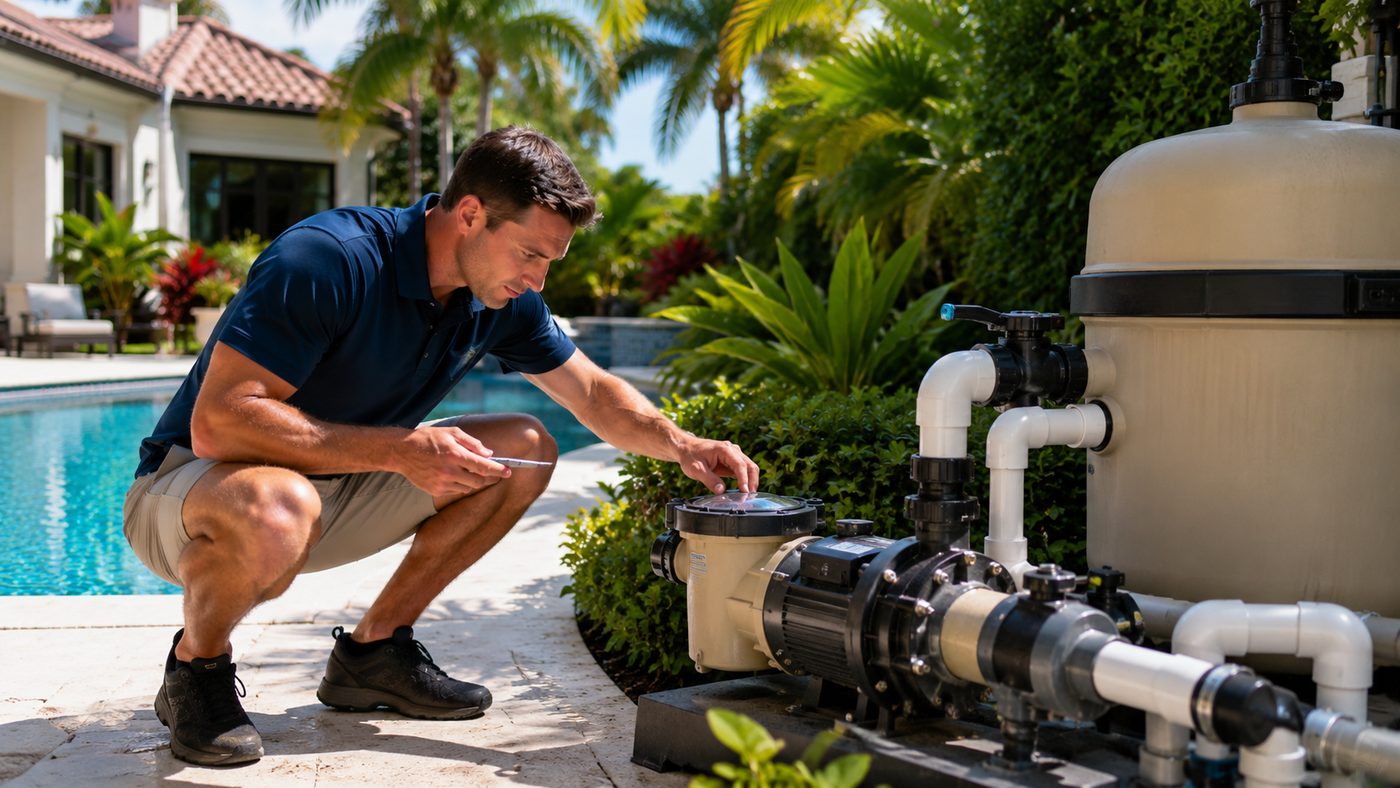
If the pump is weak, running inconsistently, or not priming properly, circulation drops and sanitizer distribution suffers. Without steady flow, the pool may develop stagnant areas where algae can grow quickly.
Dirty or Clogged Filters
A dirty filter cannot trap debris effectively. When filtration slows down, small particles stay in the water longer, making the pool appear cloudy and increasing the chance of algae. Filter cleaning and backwashing are especially important during heavy-use periods and after storms.
Skimmer and Basket Maintenance
Full skimmer baskets and pump baskets reduce water flow. If baskets are not cleared regularly, the system has to work harder and circulation can drop. That can be enough to create the low-flow conditions algae love.
Broken Returns or Circulation Issues
If water is not moving properly through the pool, some areas may stay untreated. Return jets should help move water across the surface and into dead zones. If you notice weak circulation or uneven cleaning, it may be time for a professional inspection.
Practical Tips for Boca Raton Pool Owners
There are a few simple habits that can make a big difference in preventing fast algae growth in South Florida.
- Test your water regularly, especially after rain or heavy pool use.
- Keep chlorine and pH in the proper range for your pool type.
- Run your pump long enough each day to support full circulation.
- Empty skimmer and pump baskets before they get overloaded.
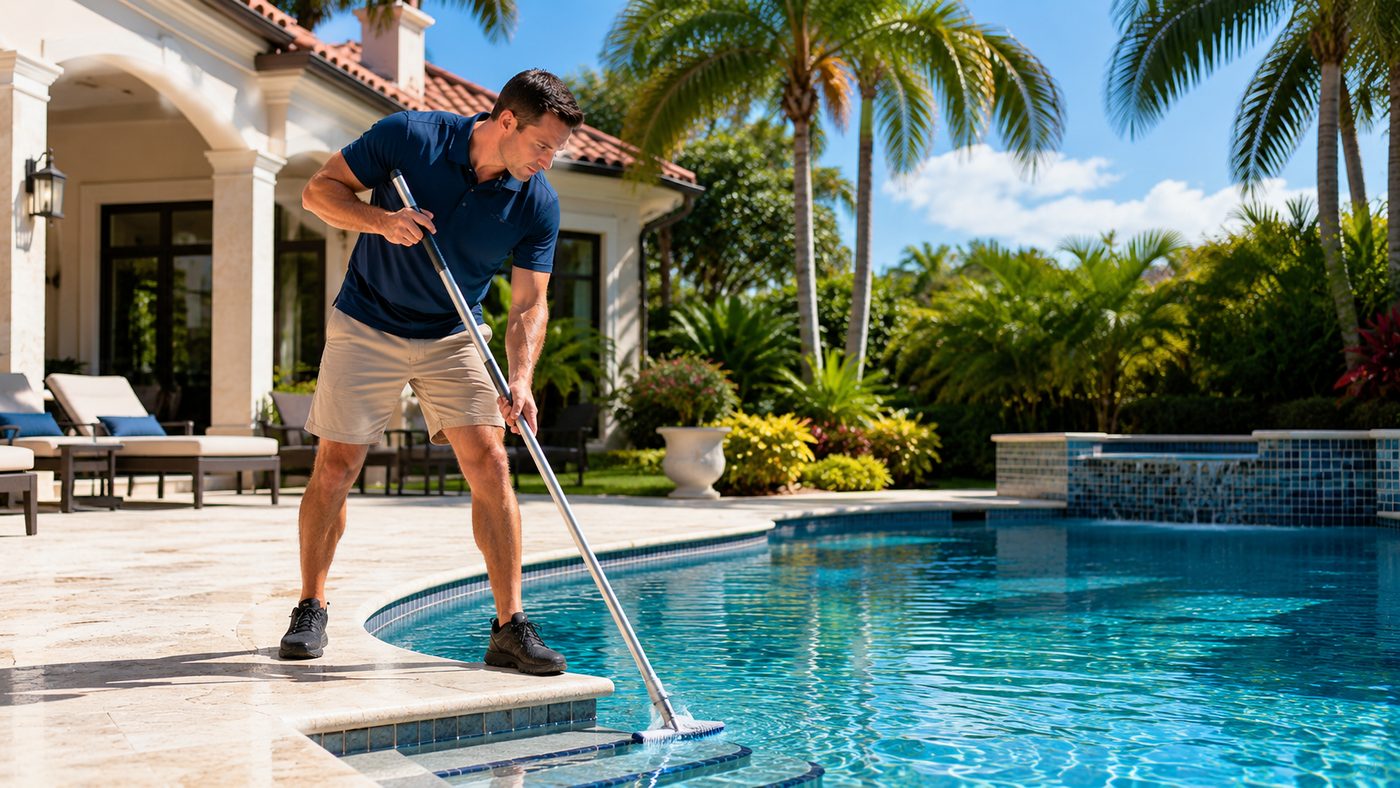
- Brush steps, corners, and shaded areas where algae can start.
- Vacuum debris before it sits and breaks down in the water.
- Inspect your filter and clean it on schedule.
- Check water level so skimming and circulation work properly.
These steps sound simple, but consistency is what keeps a pool clear. Skipping a week in South Florida can be enough for algae to start spreading, especially during hot, wet weather.
Why Weekly Service Helps Prevent Green Water
Weekly service is one of the most effective ways to prevent algae problems before they start. A consistent maintenance routine helps keep water chemistry stable, removes debris early, and catches equipment issues before they become bigger problems. For many homeowners, weekly service is the difference between a pool that stays ready to use and one that needs frequent cleanup.
Professional service typically includes water testing, chemical balancing, brushing, skimming, basket cleaning, visual equipment inspection, and attention to circulation concerns. That kind of routine is especially valuable in Boca Raton, where weather and environmental conditions can change pool chemistry quickly.
If you are already handling some of your own maintenance, having a trusted Boca Raton pool service check the pool regularly can still help you avoid expensive surprises. A trained eye can often spot early signs of algae, filtration trouble, or chemical imbalance before the water turns green.
When to Call a Professional
It may be time to call a professional if your pool water is starting to look green, cloudy, or dull despite your regular care. You should also reach out if you notice slipping chlorine levels, unusual debris buildup after storms, weak circulation, recurring algae on the walls or steps, or a filter that does not seem to be keeping up.
Some green pool situations are minor and can be corrected with better circulation and balanced chemistry. Others require more careful treatment, especially if the algae has spread or the pool has been sitting untreated for several days. A professional can assess the cause and recommend the right next steps for your specific system.
FAQ
Why does my pool turn green so fast in Boca Raton?
Because warm water, strong sunlight, storms, and organic debris all create ideal conditions for algae growth. If chlorine drops or circulation is weak, algae can spread quickly.
Can rain make my pool turn green?
Yes. Rain can dilute sanitizer, add debris, and disturb water balance. After heavy storms, it is a good idea to test and adjust the pool as needed.
How often should a pool be serviced in South Florida?
Weekly service is a common and effective schedule for many pools in this climate because conditions change quickly and algae can develop fast.
What is the first sign that algae may be starting?
Cloudy water, a dull look, slippery surfaces, or green tint in shaded areas can all be early warning signs. Catching it early makes it much easier to correct.
Keep Your Pool Clear with Reliable Local Help
South Florida pools face constant pressure from heat, storms, sunlight, and debris, which is why green water can appear so quickly. The good news is that with consistent water testing, proper circulation, regular cleaning, and routine equipment care, you can greatly reduce the chances of an algae problem.
If you want dependable help with Boca Raton pool maintenance, Boca Pool Servicing is here to help homeowners stay ahead of common pool issues and keep their water clear, balanced, and ready to enjoy. Call 561-699-9800 to speak with a local professional about weekly service or help with a pool that is starting to turn green.
Want help keeping your pool clear, safe, and ready to use?
Request Boca Raton pool service help for weekly cleaning, green pool recovery, vacation-home care, equipment concerns, or renovation conversations.