Saltwater pools are popular with Boca Raton homeowners because they can feel gentler on the skin and often require a different care routine than traditional chlorine pools. But “saltwater” does not mean maintenance-free. In South Florida’s heat, humidity, heavy rain, and year-round pool use, even small mistakes can lead to cloudy water, scale buildup, corrosion, or a stressed salt chlorine generator. If you want your pool to stay clean, comfortable, and ready to enjoy, it helps to know the most common saltwater pool maintenance mistakes and how to avoid them.
At Boca Pool Servicing, we work with local pool owners who want reliable care without the guesswork. Below are the most common issues we see in Boca Raton saltwater pools, along with practical tips for keeping your system in good shape.
1. Assuming Saltwater Pools Take Less Attention
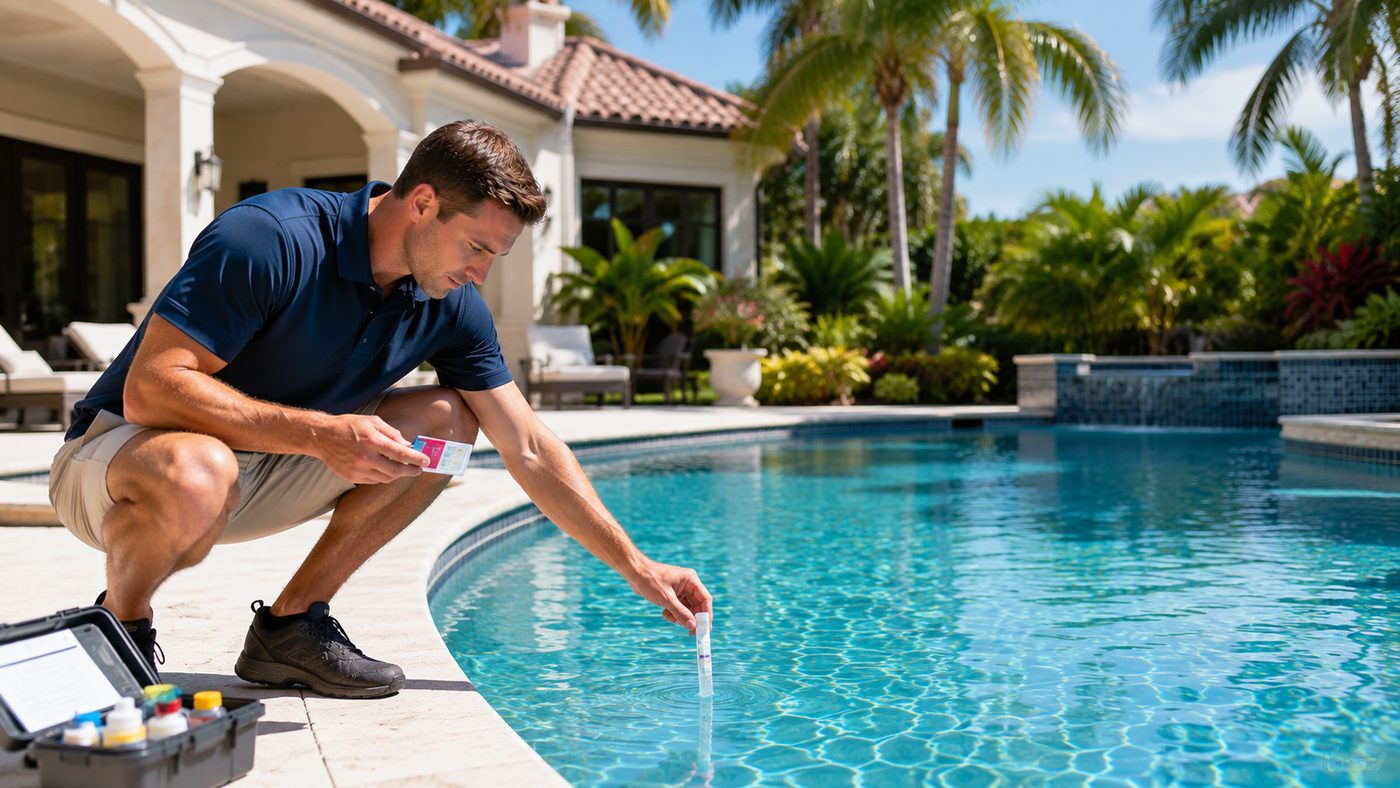
One of the biggest misunderstandings is that saltwater pools are “set it and forget it.” In reality, they still need regular water testing, brushing, filter cleaning, and equipment checks. The salt cell only helps create chlorine; it does not replace overall pool care.
Homeowner tip: Test your water regularly for salt level, free chlorine, pH, alkalinity, and calcium hardness. In Boca Raton, frequent rain and intense sun can change water balance faster than many owners expect.
2. Ignoring pH Balance
Saltwater pools often drift toward higher pH, especially when the generator runs often. If the pH climbs too high, you may notice scale on tile, cloudy water, reduced sanitizer effectiveness, and possible irritation for swimmers. High pH can also shorten the life of pool equipment over time.
Homeowner tip: Watch pH closely and adjust it as needed. If you see white buildup around the waterline, on the salt cell, or on fixtures, high pH may be part of the problem.
3. Letting the Salt Cell Get Too Dirty
The salt cell is the heart of the system, and it needs regular inspection. Calcium scale and debris can reduce its efficiency, which may cause low chlorine production and water quality problems. Many homeowners wait until there is an obvious issue before checking the cell, but by then the pool may already be out of balance.
Homeowner tip: Inspect the cell on a regular schedule and clean it only as recommended by the manufacturer. Overcleaning or using the wrong method can damage the cell.
4. Adding Too Much Salt or Not Enough
Salt levels need to stay within the equipment manufacturer’s recommended range. Too little salt can reduce chlorine production, while too much salt can stress the system and increase the risk of corrosion. After heavy rain or splash-out, salt concentration can shift, so it is important to test instead of guessing.
Homeowner tip: Add salt gradually and retest before making more changes. Never assume a bag count alone tells you the right level.
5. Skipping Brushing and Debris Removal
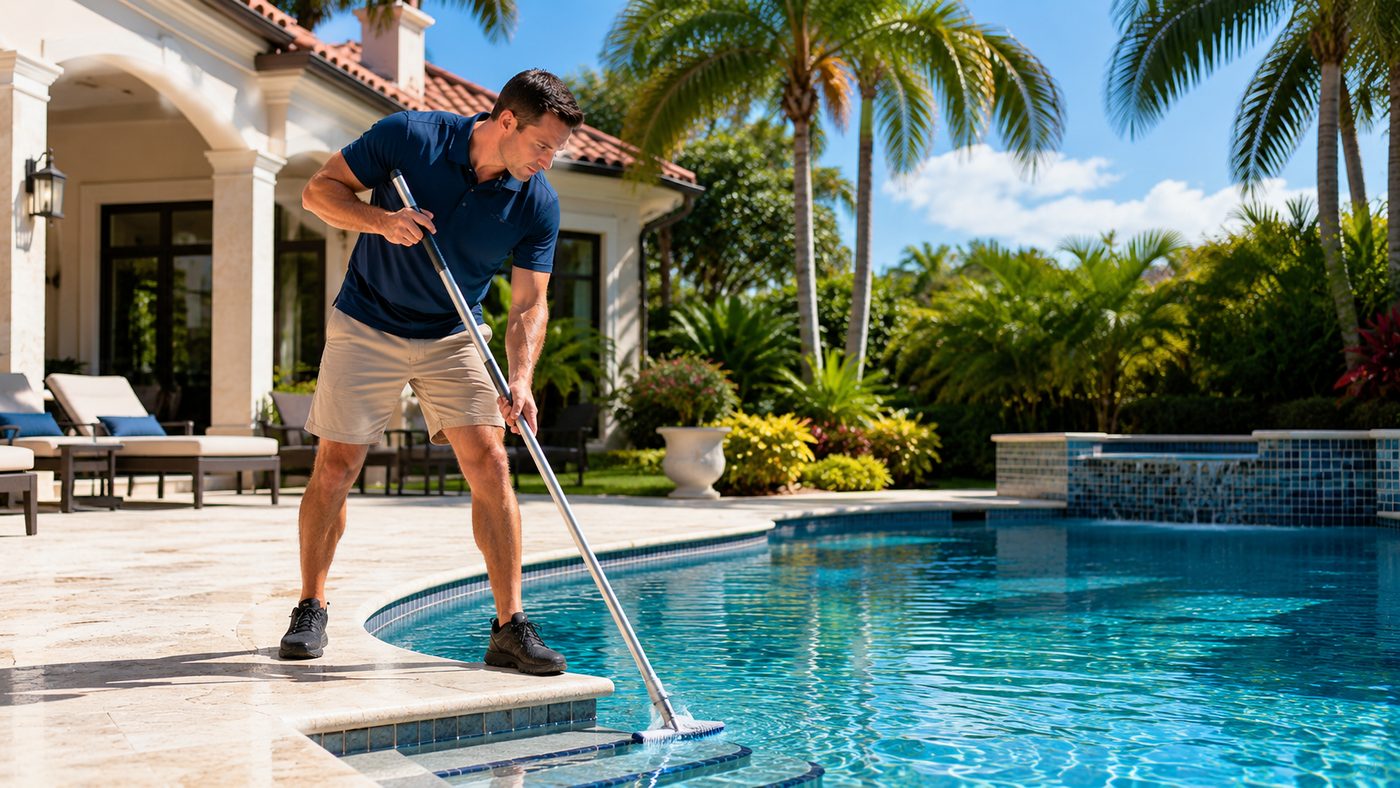
Even with good circulation, dirt, pollen, leaves, and organic buildup can settle on walls, steps, and behind ladders. In Boca Raton, landscaping debris and storms can make this worse. If surfaces are not brushed regularly, algae and scale have more places to develop.
Homeowner tip: Brush pool walls, steps, and shaded areas weekly. Pay extra attention after storms, windy days, or periods of heavy use.
6. Neglecting the Filter
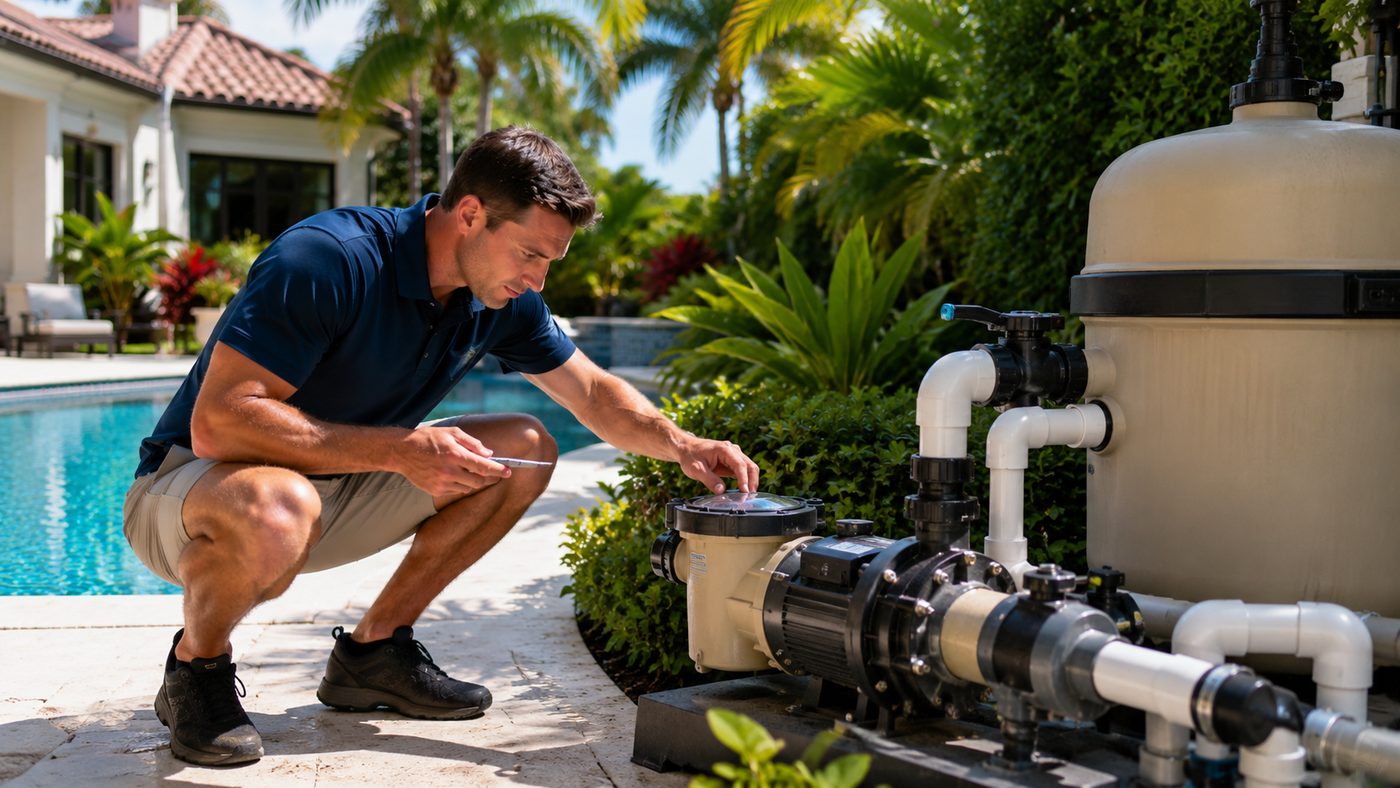
A saltwater pool still depends on a clean, efficient filter. When the filter is clogged, circulation suffers, water clarity drops, and the chlorine system may have to work harder. Many pool problems that seem like “saltwater issues” actually start with poor filtration.
Homeowner tip: Clean or backwash the filter on a routine schedule based on your pool type and usage. If your water looks dull even when chemistry is close to normal, the filter may need attention.
7. Overlooking Calcium and Water Hardness
Boca Raton water conditions and evaporation can contribute to calcium buildup, especially in saltwater systems. If calcium hardness gets too high, scaling can appear on tile, heaters, plumbing, and the salt cell. If it is too low, water may become aggressive and damage surfaces or equipment.
Homeowner tip: Include calcium hardness in your regular testing routine. This is especially important if you notice white deposits, rough tile surfaces, or scale on the cell.
8. Failing to Check for Corrosion
Salt systems can be hard on metal components if the pool is not properly balanced or if equipment is not maintained. Ladders, handrails, light rings, screws, and other metal parts can show wear over time. Early signs of corrosion should be addressed before they become costly repairs.
Homeowner tip: Look over metal fixtures, fasteners, and equipment pads regularly. If you see rust, pitting, or discoloration, have it checked promptly.
9. Using Pool Chemicals Without Testing First
It can be tempting to add chemicals based on a rough estimate, but saltwater pools respond best to measured adjustments. Adding the wrong product or too much of it can throw off balance and create new issues. This is especially true when trying to correct chlorine, pH, or alkalinity at the same time.
Homeowner tip: Test first, adjust second. If you are unsure which chemical is needed, consult a professional before adding anything new.
10. Not Accounting for Boca Raton Weather
South Florida weather has a direct effect on pool maintenance. Heavy rain can dilute salt and chemicals. Strong sun can burn off chlorine. Wind can blow in debris. High temperatures can also make water chemistry swing more quickly than expected. Homeowners who use the same maintenance routine year-round without checking conditions may run into avoidable issues.
Homeowner tip: After major rain, storms, or periods of intense heat, check your pool sooner rather than later. A quick inspection can prevent a minor imbalance from becoming a bigger problem.
How to Keep Your Saltwater Pool in Better Shape
The easiest way to avoid common saltwater pool mistakes is to stay consistent. Test the water, brush the pool, keep the filter clean, inspect the cell, and watch for changes in performance or water clarity. Small adjustments made early are usually easier than fixing a neglected pool later.
If you own a saltwater pool in Boca Raton, having local help can make a big difference. A professional pool service can spot issues before they become expensive and help keep your water balanced through changing weather, seasonal use, and equipment wear.
Need Help With Saltwater Pool Maintenance in Boca Raton?
Boca Pool Servicing helps homeowners maintain saltwater pools with dependable, local care. Whether you need routine maintenance, water balancing, equipment checks, or help solving a specific problem, our team is ready to help keep your pool in great shape.
Call Boca Pool Servicing today at 561-699-9800 to schedule service or ask about saltwater pool maintenance in Boca Raton.
Want help keeping your pool clear, safe, and ready to use?
Request Boca Raton pool service help for weekly cleaning, green pool recovery, vacation-home care, equipment concerns, or renovation conversations.