Pool Light Repair and Replacement Guide for Boca Raton Homes
Pool lights do more than add evening ambiance. For Boca Raton pool owners, they also help improve visibility, support safer night swimming, and make it easier to spot water clarity issues, debris, or early signs of algae growth. When a pool light stops working, flickers, or shows signs of water intrusion, it can point to anything from a simple bulb issue to a wiring, gasket, or transformer problem. Because South Florida pools deal with heavy rain, humidity, salt air, and year-round use, pool lighting problems are common enough that homeowners should know what to look for and when to call a professional.
This guide explains the most common pool light repair and replacement concerns, how Boca Raton weather affects pool equipment, and what homeowners can do to help keep their pool safe and well maintained. If you are already scheduling Boca Raton pool service or looking for help with pool maintenance in Boca Raton, understanding your lighting system can make it easier to catch small issues before they become larger repairs.
Why Pool Lights Matter for Boca Raton Homes
In a climate like Boca Raton, pool lights are more than a luxury feature. They help homeowners keep an eye on pool conditions after sunset, especially during the warmer months when evening swims are common. Good lighting can make it easier to notice floating debris, cloudy water, or areas where circulation may be weak. That matters because poor circulation and lighting problems sometimes appear together when equipment is not working properly.
Pool lights can also support better day-to-day pool care. When lights are functioning correctly, it is easier to inspect the pool after storms, during routine cleaning, or while checking chlorine levels and water balance. For Boca Raton pool owners, that visibility is valuable during rainy periods and hurricane season, when water chemistry and debris load can change quickly.
Common Reasons a Pool Light Stops Working
Pool light issues can come from the fixture itself, the electrical connection, or the surrounding pool environment. Some of the most common problems include:
- Burned-out bulb: Traditional pool lights eventually wear out.
- Faulty LED module: LED systems can last longer, but components can still fail.
- Damaged gasket: A worn gasket can allow water into the fixture.
- Corroded wiring: Moisture, age, and chemical exposure can affect connections.
- Tripped GFCI or breaker: Electrical protection devices may shut the light off if a fault is detected.
- Transformer or control issue: Some lighting systems rely on a transformer, switch, or automation system.
Because pool lighting is tied to electrical safety, it is not something to troubleshoot aggressively without the right knowledge. If a light flickers, trips a breaker, or shows moisture inside the lens, it is usually best to stop using it and have it inspected.
Signs Your Pool Light May Need Repair
Watch for these warning signs:
- The light will not turn on at all
- The light flickers or turns on intermittently
- The lens looks foggy or has condensation inside
- You see cracks, rust, or visible corrosion
- The light color looks dim or uneven
- The breaker or GFCI keeps tripping
- You notice water inside the fixture housing
In Boca Raton, where high humidity and frequent rain can affect outdoor equipment, moisture-related issues are especially important to catch early. A fogged lens may seem minor, but it can indicate a seal failure that eventually leads to more expensive damage.
When Repair May Be Enough vs. When Replacement Makes More Sense
Some pool light problems can be repaired without replacing the full fixture. For example, a burnt-out bulb, a failed switch, or a basic gasket replacement may solve the issue. In other cases, especially with older fixtures, replacement may be the safer and more practical choice.
Replacement may make more sense when:
- The fixture has repeated moisture intrusion
- The housing is cracked or corroded
- Parts are no longer easy to source
- The system is outdated or inefficient
- The light has become unreliable after several repairs
For homeowners comparing repair and replacement, the condition of the entire system matters. A light that keeps failing may be connected to a larger issue with wiring, grounding, or the fixture seal. A qualified professional can help determine whether a simple repair is appropriate or whether replacing the light is the better long-term solution.
How Boca Raton Weather Affects Pool Lights
South Florida conditions can be tough on pool equipment. Boca Raton pool owners deal with intense sun, heavy rain, salt air, and seasonal storms. All of these can take a toll on pool lights and their components.
Storm season: Strong rain and wind can push debris into the pool and increase strain on the filtration system. Storm-related power interruptions may also affect lighting controls or reveal electrical issues that were already developing.
Humidity and moisture: High humidity can speed up corrosion and make it easier for water to find weak points in seals and fittings.
Heat and UV exposure: Over time, extreme sun can age plastic components, gaskets, and surrounding materials.
Salt air: Even inland homes can feel some salt-related wear, especially on exposed metal parts and fixtures.
Because of these conditions, pool maintenance in Boca Raton should include regular inspection of lighting fixtures along with pumps, filters, and skimmers.
Pool Light Safety Tips for Homeowners
Pool lighting is an electrical system, so safety should come first. Homeowners can do basic visual checks, but deeper repairs should be left to a professional who understands pool electrical systems.
- Turn off power before any inspection near the fixture
- Do not use a pool light that sparks, flickers, or shows water intrusion
- Check the GFCI if the light suddenly stops working
- Avoid opening sealed fixtures unless you are qualified to do so
- Keep the pool area dry when checking switches or control panels
If you are unsure whether a problem is electrical or mechanical, it is safer to stop and call for help. That is especially true if the breaker trips repeatedly or you notice a burning smell, heat, or visible damage.
How Pool Chemistry Can Affect Light Fixtures
Water chemistry does not usually cause a pool light to fail overnight, but unbalanced water can contribute to long-term wear. High chlorine levels, low pH, and aggressive water can speed up deterioration of gaskets, metal parts, and seals. Cloudy water can also make a dim light seem like an electrical problem when the issue is partly visibility related.
For Boca Raton pool owners, maintaining balanced water helps protect more than just the pool finish. It also supports equipment longevity. Regular testing of chlorine, pH, alkalinity, and calcium hardness can reduce wear on the pool system as a whole. If algae starts to form, the water can appear greener or duller at night, making the pool light seem weaker than it really is.
Pool Lights, Algae Prevention, and Water Clarity
Lighting itself does not prevent algae, but it can help you spot early warning signs. A pool light can make it easier to notice cloudy water, film on the walls, or green tint near corners and steps. Those are often early indicators that circulation, sanitizing, or brushing may need attention.
Weekly service is one of the best ways to stay ahead of algae in South Florida. A proper service visit typically includes:
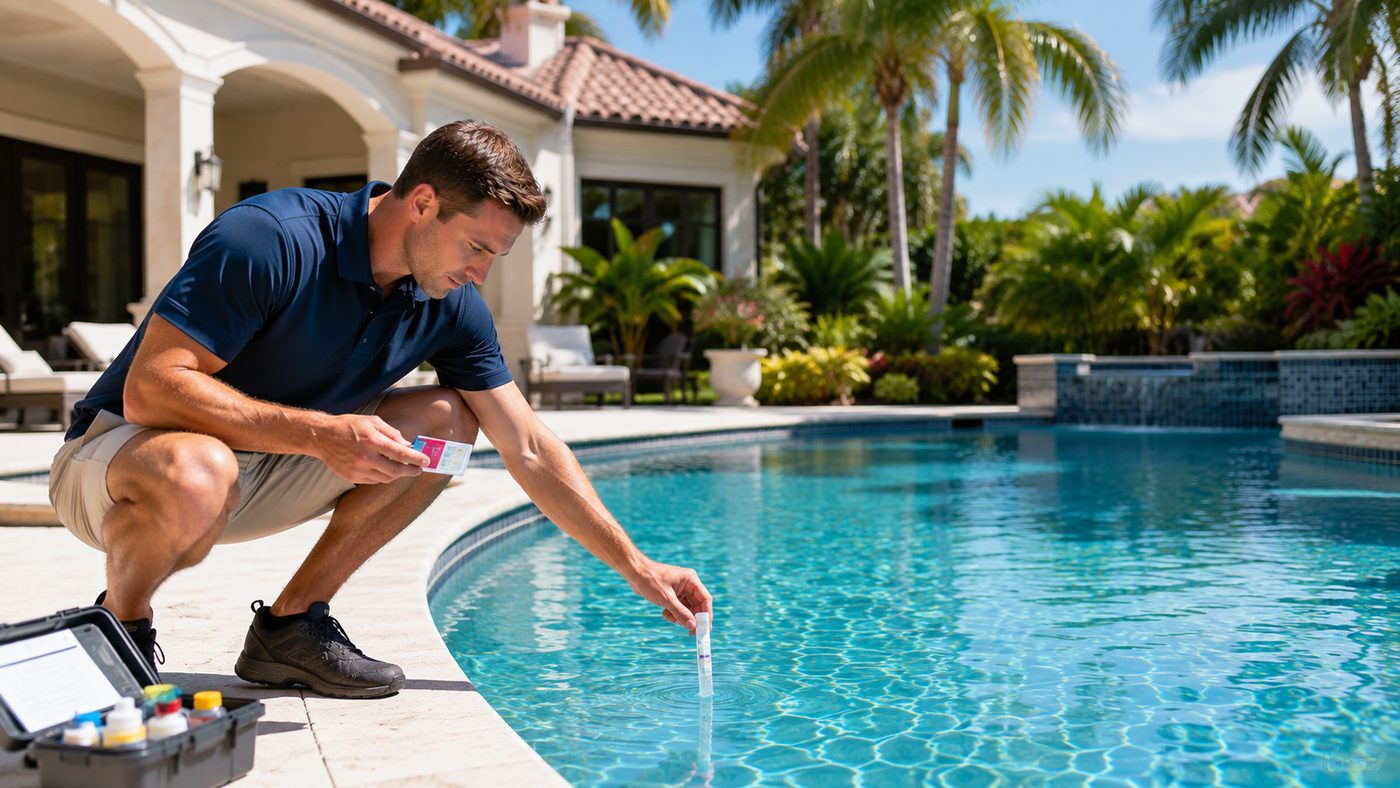
- Testing and balancing water chemistry
- Cleaning baskets and removing debris
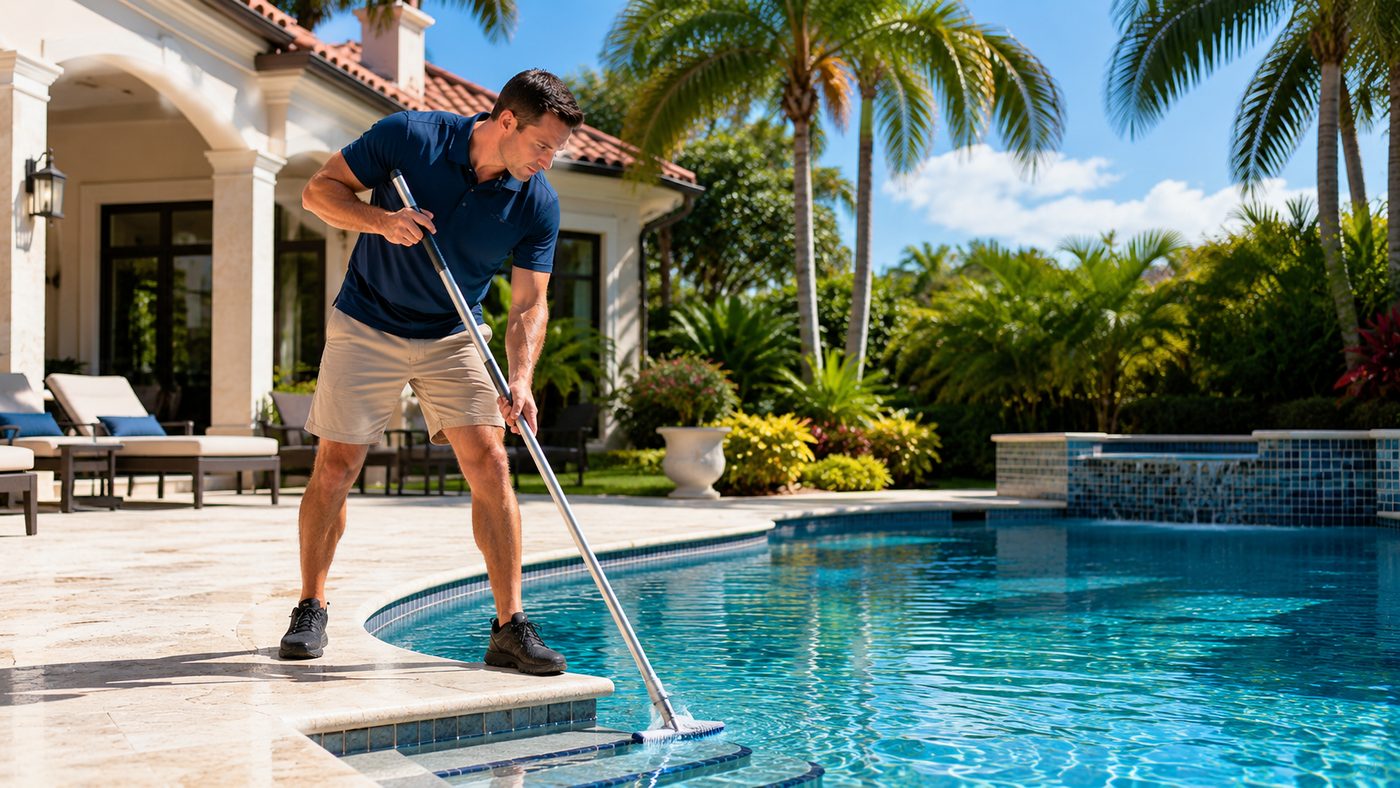
- Brushing walls and steps
- Checking circulation and filtration
- Watching for early algae growth
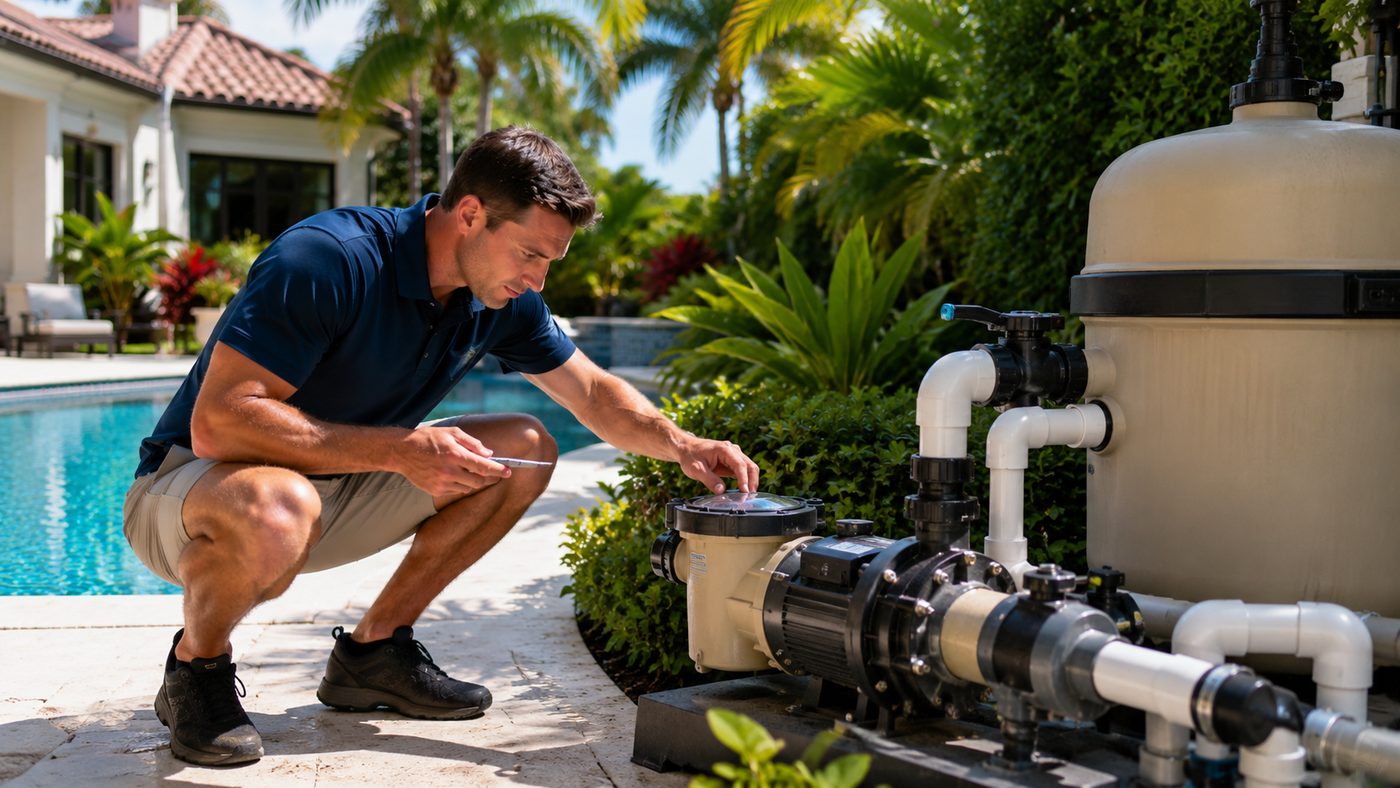
- Inspecting equipment for visible wear
For pools with working lights, these checks are even easier because visibility is better after dark and in deeper areas. That can help a technician or homeowner catch changes faster.
What Homeowners Can Check Before Calling for Help
There are a few simple things Boca Raton homeowners can look at before scheduling service:
- Confirm the pool light switch is on
- Check the breaker or GFCI reset button
- Look for obvious condensation inside the lens
- See whether other pool equipment is also affected
- Note whether the problem started after a storm or power outage
These observations can help a technician narrow down the cause more quickly. Even if you do not attempt repairs yourself, having details about when the issue started and what symptoms you noticed can be helpful.
When to Call a Professional
Call a professional if the light is not working after checking the basics, if you see water inside the fixture, or if the breaker keeps tripping. You should also seek help if the light is old, corroded, or hard to access. Pool electrical systems should be handled carefully, and lighting repairs often require specific tools and experience.
It is also a good idea to call for service if the lighting issue seems connected to other pool problems, such as poor circulation, cloudy water, or equipment that is struggling after a storm. In many cases, a trained technician can spot related issues during the same visit and help you avoid repeat problems.
How Regular Pool Service Helps Protect Your Lighting System
Consistent weekly care can extend the life of pool equipment, including lights. During routine Boca Raton pool service, a technician can look for early signs of leaks, corrosion, loose fittings, or water chemistry problems that might affect the lighting system over time. This is especially important in coastal and storm-prone environments where wear can happen faster than homeowners expect.
Routine service also helps keep the pool water clearer and the equipment under less stress. Cleaner water, balanced chemistry, and better circulation all support the overall health of the pool. When lights are part of that larger system, regular attention can make a noticeable difference.
FAQ
Why is my pool light foggy inside?
Fogging or condensation inside the lens often points to a seal or gasket problem. It may still work for a while, but moisture inside the fixture should be inspected as soon as possible.
Can I replace a pool light bulb myself?
Some homeowners may be able to identify a simple bulb issue, but pool lights involve electricity and sealed fixtures near water. If you are not experienced with pool electrical systems, it is safer to call a professional.
Does a working pool light help me spot algae?
Yes. A light makes it easier to notice water clarity changes, surface film, and early algae growth, especially at night or in deeper parts of the pool.
Can storms damage pool lights?
Yes. Heavy rain, debris, power interruptions, and water intrusion can all affect pool lighting systems during Boca Raton storm season.
Call Boca Pool Servicing for Help
If your pool light is flickering, dim, fogged, or not working at all, Boca Pool Servicing can help you figure out the next step. From routine pool maintenance in Boca Raton to troubleshooting lighting concerns, having a professional check the system can save time and reduce the risk of further damage. For friendly, practical help from a local Boca Raton pool service provider, call 561-699-9800 today.
Want help keeping your pool clear, safe, and ready to use?
Request Boca Raton pool service help for weekly cleaning, green pool recovery, vacation-home care, equipment concerns, or renovation conversations.