Keeping a pool clear in Boca Raton takes more than skimming leaves and running the pump. South Florida heat, heavy sun exposure, afternoon storms, and year-round pool use all put pressure on water chemistry. For many Boca Raton pool owners, one of the most useful ways to understand pool care is to learn how organic chemicals fit into regular maintenance, how they affect water balance, and when a professional Boca Raton pool service should step in.
In pool care, “organic chemicals” often refers to naturally derived or carbon-based compounds used to support cleaning, oxidation, stain treatment, algae control, and water balance. Some are used directly in pool treatment, while others may be part of products designed to reduce buildup, break down contaminants, or improve overall water quality. Knowing what these products do, and what they do not do, can help you make better decisions about pool maintenance in Boca Raton.
What Are Organic Chemicals in Pool Care?
In simple terms, organic chemicals are compounds that contain carbon. In a pool setting, they may come from plant-based sources, food-related contaminants, or treatment products that help manage water quality. Pool owners often encounter organic matter in the form of leaves, grass, sunscreen, body oils, insects, and storm debris. These contaminants can feed algae, cloud the water, and increase chlorine demand.
Some pool chemicals used in maintenance are designed to break down or remove organic buildup. Others help prevent organic contamination from becoming a bigger problem. The key is understanding that no single chemical solves every issue. Clean water depends on the right balance of sanitizing, circulation, filtration, and routine service.
How Organic Contaminants Affect Your Pool
In Boca Raton, warm water and frequent rain make pools especially vulnerable to organic contamination. Once leaves, pollen, and other debris enter the water, they begin to break down. That decomposition can:
- Increase chlorine demand
- Feed algae growth
- Cause cloudy water
- Create staining on plaster or finishes
- Reduce filter efficiency
- Strain pool equipment over time
This is one reason weekly service matters. Even small amounts of debris can affect water chemistry when temperatures are high and the pool is being used often.
Common Organic Chemicals and Their Role in Pool Care
Not every pool treatment product is used the same way, but several categories are commonly associated with organic or organic-supporting chemistry in pool maintenance:
Oxidizers
Oxidizers help break down organic waste such as body oils, sweat, sunscreen, and other contaminants that regular sanitizing may not remove quickly enough. When a pool has heavy use or a storm leaves behind debris, oxidation can help restore water clarity and reduce strain on the sanitizer.
Enzyme Treatments
Enzymes are often used to help break down organic material in the waterline, skimmers, and filtration system. They can help reduce buildup from oils and lotions that may cause scum lines or cloudy water. Enzyme products are not a substitute for proper sanitizing, but they can be a useful part of routine pool maintenance in Boca Raton.
Algaecides
Some algaecides are designed to prevent or control algae growth by disrupting the organic materials algae needs to spread. They are often used as a support tool, especially after heavy rain, long periods of heat, or reduced circulation. Algaecides work best when the pool is already balanced and sanitized correctly.
Stain and Scale Treatments
Organic stains can come from leaves, mulch, or other plant debris. Depending on the surface and the type of stain, treatment may involve targeted chemistry to lift discoloration and protect finishes. In Boca Raton, where outdoor landscaping and storms can both contribute to staining, timely treatment helps prevent permanent marks.
Why Boca Raton Pools Need Extra Attention
Boca Raton pool owners face a unique mix of conditions that make water chemistry harder to maintain:
- Heat and UV exposure: Strong sun can weaken sanitizer more quickly.
- Frequent rain: Rainwater can dilute chemicals and shift pH levels.
- Storm runoff: Wind and flooding can introduce dirt, leaves, and organic debris.
- Heavy use: More swimmers means more oils and organic waste in the water.
- Landscape debris: Trees and tropical plants can add constant organic load.
Because of these conditions, Boca Raton pool service is often less about reacting to problems and more about preventing them through consistency.
How Organic Chemicals Are Used Safely and Effectively
Pool chemicals should always be used according to the pool’s specific needs, not just by routine habit. The same product can help one pool and cause problems in another if the chemistry is off. Here are some practical guidelines:
Test the Water First
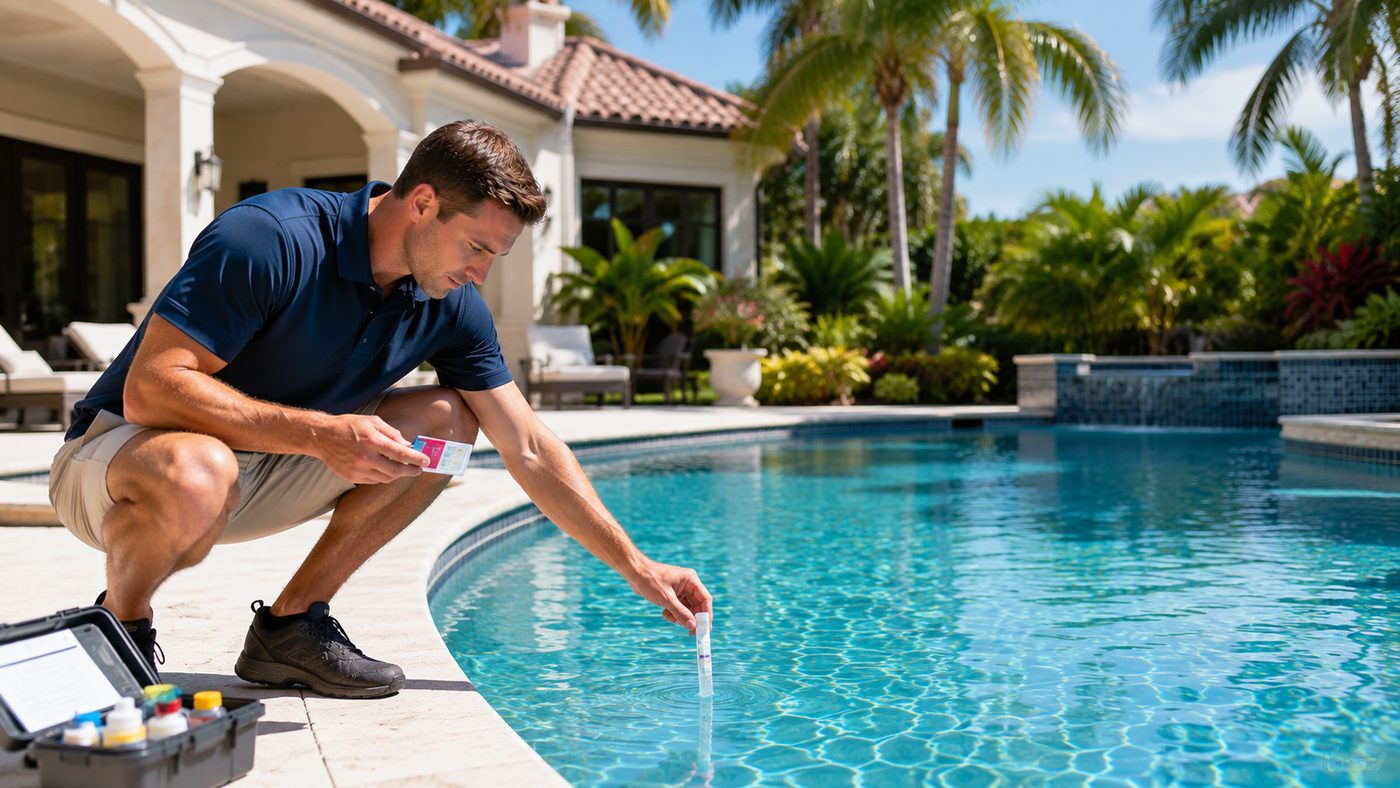
Before adding anything, test chlorine, pH, alkalinity, calcium hardness, and stabilizer levels. Organic treatments work best when the basics are in range.
Use the Right Amount
Too little treatment may not solve the issue. Too much can waste product or upset the balance. More is not always better in pool chemistry.
Improve Circulation
Organic chemicals work more effectively when water is moving through the system. Run the pump long enough to circulate chemicals through the pool and filter.
Clean the Filter
If the filter is loaded with debris, organic contamination can stay trapped in the system and keep circulating problems back into the pool.
Address the Cause
If algae keeps returning or the water turns cloudy after every storm, the issue may be circulation, filtration, or chemical balance rather than a need for more treatment alone.
Organic Chemicals and Algae Prevention
Algae prevention is one of the biggest reasons pool owners ask about organic treatments. Algae thrives when there is warmth, sunlight, poor circulation, and available organic material. In Boca Raton, that combination can happen fast.
To reduce the chance of algae growth:
- Skim debris quickly after storms
- Keep baskets empty and filters clean
- Maintain proper sanitizer levels
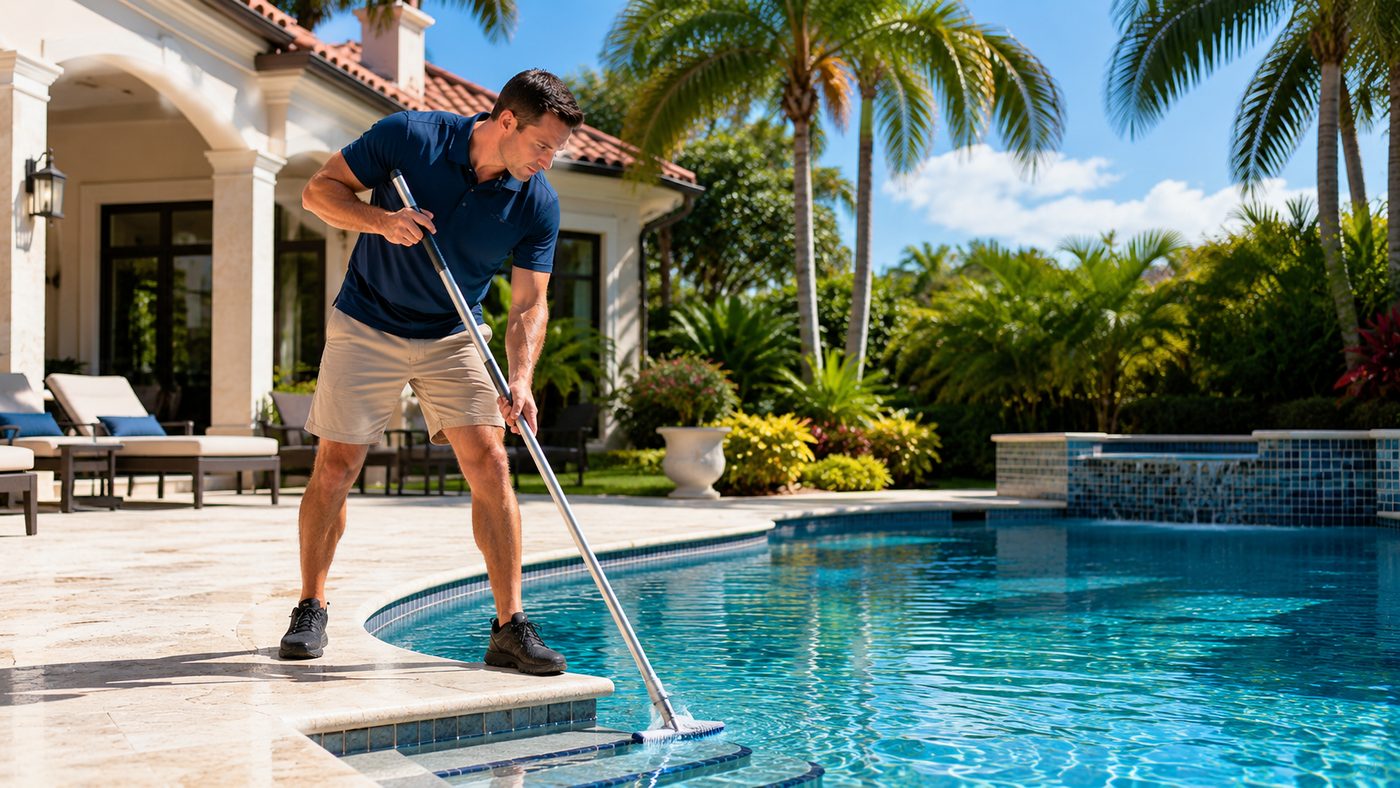
- Brush walls and steps regularly
- Run the pump long enough for complete circulation
- Use enzyme or algaecide support when appropriate
If your pool starts turning green, or if the water looks dull and sluggish despite treatment, it may be time for a professional inspection. Sometimes algae is only part of the problem, and underlying issues in circulation or chemistry need to be corrected first.
Equipment Care Matters Too
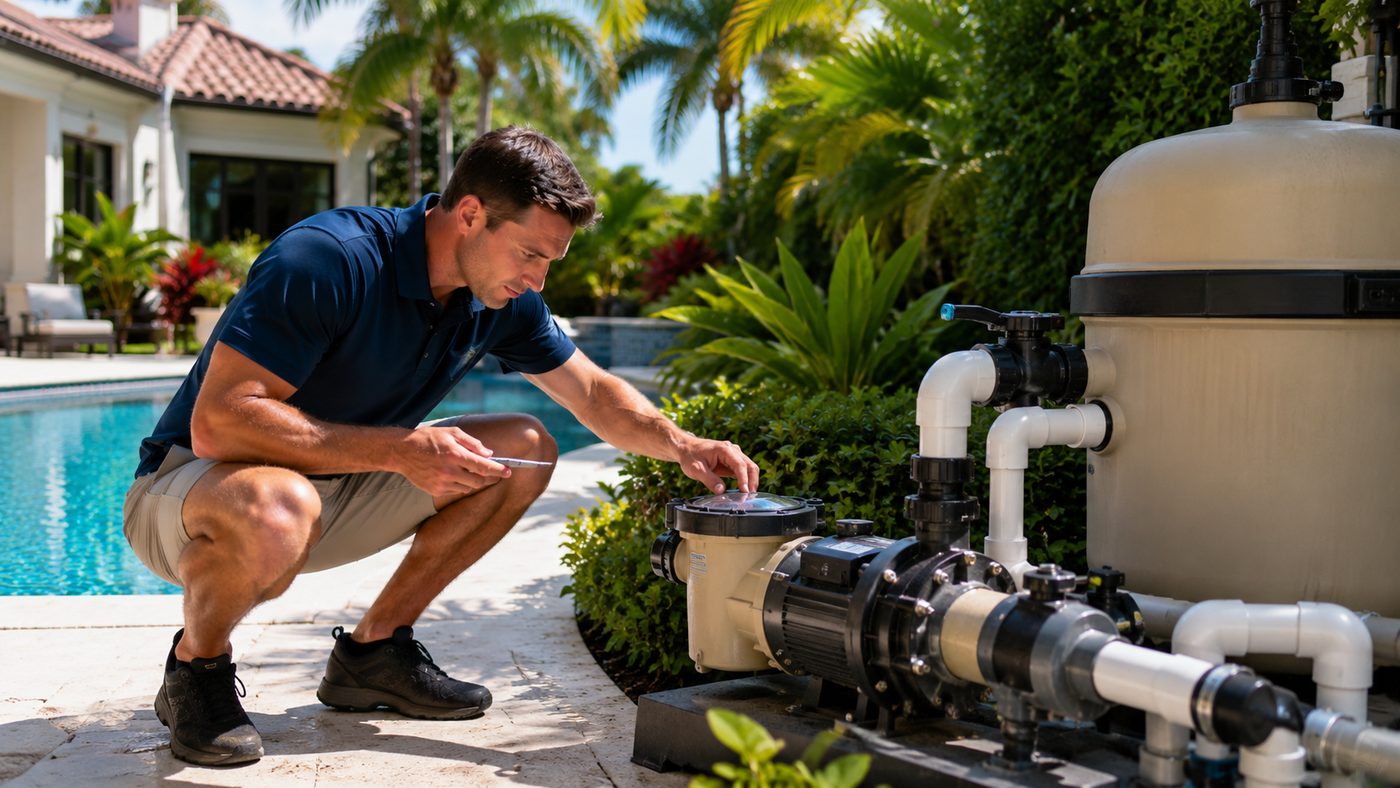
Organic contamination does not only affect the water. It also affects the equipment that keeps the pool running. Leaves, oils, and debris can clog skimmers, reduce pump efficiency, and place extra stress on the filter. Over time, that can lead to poor circulation and more chemical imbalance.
Regular equipment care should include:
- Cleaning skimmer and pump baskets
- Checking for unusual pressure changes in the filter
- Inspecting the pump lid and seals
- Making sure valves and timers are working properly
- Watching for debris buildup around returns and drains
When equipment is running efficiently, organic treatments are more effective and the pool stays easier to maintain.
What Homeowners Can Do Between Weekly Services
Even with professional weekly service, Boca Raton pool owners can help keep water in good condition between visits:
- Remove leaves and debris after rain or wind
- Empty skimmer baskets if they fill quickly
- Keep an eye on water clarity and color
- Look for unusual odor, cloudy water, or foaming
- Brush visible buildup along steps and tile lines
- Do not mix chemicals unless you know exactly what you are doing
These simple steps help reduce stress on the pool system and can prevent minor issues from becoming larger repairs.
When to Call a Professional
Some pool problems need more than routine homeowner care. It is a good idea to contact a professional Boca Raton pool service if you notice:
- Persistent green or cloudy water
- Algae returning after treatment
- Strong chemical odor or irritation
- Stains that do not lift with normal cleaning
- Rapid chlorine loss after storms
- Equipment that seems to be working harder than usual
- Water balance problems that keep coming back
A trained technician can identify whether the issue is related to organic load, sanitizer demand, filtration, circulation, or a combination of factors. That matters because treating the wrong cause can lead to wasted time and continued water problems.
FAQ
Are organic chemicals safe for all pool types?
Not every product is right for every surface or system. The pool finish, equipment setup, and current water balance should all be considered before treatment is added.
Do enzymes replace chlorine or other sanitizers?
No. Enzymes can help break down organic debris, but they do not replace the need for proper sanitizing.
Why does my pool need more treatment after a storm?
Rain and wind bring in organic debris, dirt, and contaminants that increase the workload on your sanitizer and filter.
Can organic buildup cause cloudy water?
Yes. Oils, debris, and decomposing organic matter can all contribute to cloudiness and filtration problems.
How often should a Boca Raton pool be serviced?
Weekly service is common for many local pools because warm weather, heavy use, and storms can affect water chemistry quickly.
Conclusion
Organic chemicals can play an important role in pool care, but they work best as part of a complete maintenance plan. For Boca Raton pool owners, that means paying attention to water balance, algae prevention, debris control, and equipment performance throughout the year. The more consistent your pool care, the easier it is to keep the water clear, safe, and ready to enjoy.
If you need help with pool maintenance in Boca Raton, water chemistry, storm cleanup, or regular weekly service, Boca Pool Servicing is here to help. Call 561-699-9800 to speak with a professional about your pool care needs.
Want help keeping your pool clear, safe, and ready to use?
Request Boca Raton pool service help for weekly cleaning, green pool recovery, vacation-home care, equipment concerns, or renovation conversations.