Pool Leak Warning Signs Boca Raton Homeowners Should Know
If you own a pool in Boca Raton, a little water loss is normal. Between South Florida heat, wind, and daily use, evaporation can make the water level drop faster than many homeowners expect. The challenge is knowing when pool losing water is just part of the weather and when it may point to a real problem.
That is where understanding the most common pool leak signs Boca Raton homeowners should watch for can save time, stress, and unnecessary water waste. A small leak may start with nothing more than a low water line, but over time it can affect equipment, pool surfaces, and your monthly utility costs. If you are noticing unusual water loss, this guide will help you spot the difference between evaporation and a possible leak, and know when to call for professional leak detection support.
Why pool water loss is common in Boca Raton
Boca Raton’s warm climate creates ideal pool weather, but it also increases evaporation. On hot, windy days, a pool can lose more water than many homeowners realize. If your pool is exposed to direct sun for much of the day, the water level may drop even faster.
Normal evaporation is usually gradual and fairly consistent. A leak, on the other hand, often causes water loss that feels more noticeable or irregular. The key is to look at the pattern. If you are adding water more often than usual, or the level keeps dropping faster than expected, it may be time to investigate further.
For Boca Raton homeowners, it helps to keep in mind that seasonal weather, heavy pool use, and equipment wear can all affect water levels. That is why a careful check is more useful than guessing.
Common pool leak signs Boca Raton homeowners should watch for
Some leaks are obvious, but many begin with subtle signs. If you notice one or more of the following, your pool may need closer attention:
- Water level drops faster than normal even when the weather has not changed much
- Wet spots around the pool deck or soft ground near equipment
- Air in the pump or return lines, which can affect circulation
- Cracks in tile, plaster, or decking that seem to worsen over time
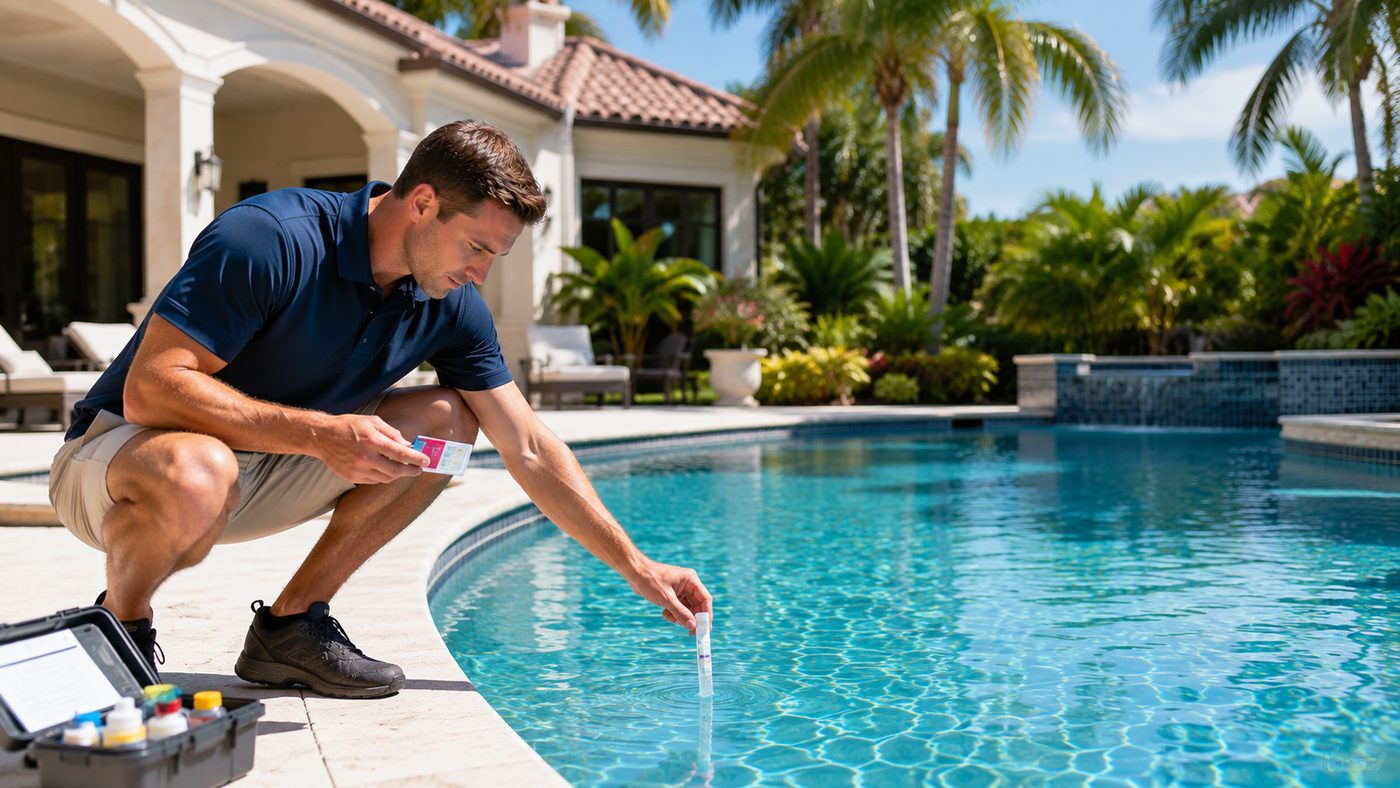
- Unusual algae growth or water chemistry that becomes difficult to balance
- Higher water bills if you are refilling the pool more often
- Equipment running longer than usual to keep the pool looking right
One sign alone does not always mean a leak, but a combination of these issues is worth paying attention to. Boca Raton pools are often surrounded by landscaping, pavers, and equipment pads that can hide early warning signs, so a visual inspection is a smart first step.
Evaporation vs. a possible leak: how to tell the difference
Many homeowners ask the same question: is the pool just evaporating, or is there a leak? The answer often depends on how quickly the water level is dropping and whether the loss continues under normal conditions.
Evaporation is usually affected by heat, sun exposure, wind, and humidity. In South Florida, a small daily drop can be normal, especially during hot stretches. A leak tends to be more consistent and may continue even when the weather is mild or the pool is not being used much.
Here are a few practical ways to think about it:
- If the water level drops only slightly during hot, windy days, evaporation may be the cause.
- If the pool is losing water quickly and you are refilling it often, a leak becomes more likely.
- If the water loss seems to happen even when the pool is not in heavy use, that is another warning sign.
- If you see damp areas near plumbing, the equipment pad, or the shell, it may be more than evaporation.
Some homeowners use a simple bucket test to compare pool water loss against evaporation. While this can be helpful as a rough check, it does not identify where a leak is coming from. If the results suggest more than normal evaporation, a professional inspection is the next step.
Where leaks often start in residential pools
Pool leaks can happen in several places, and not all of them are easy to see. In Boca Raton homes, common trouble spots often include the pool shell, plumbing lines, fittings, skimmers, returns, lights, and equipment connections.
Some leaks are visible at the surface, such as a crack in the plaster or a loose fitting. Others are hidden underground or inside the plumbing system. That is why leak detection can be more involved than simply looking at the waterline.
Common areas to check include:
- Skimmers where the pool wall meets the opening
- Return jets and fittings around the pool wall
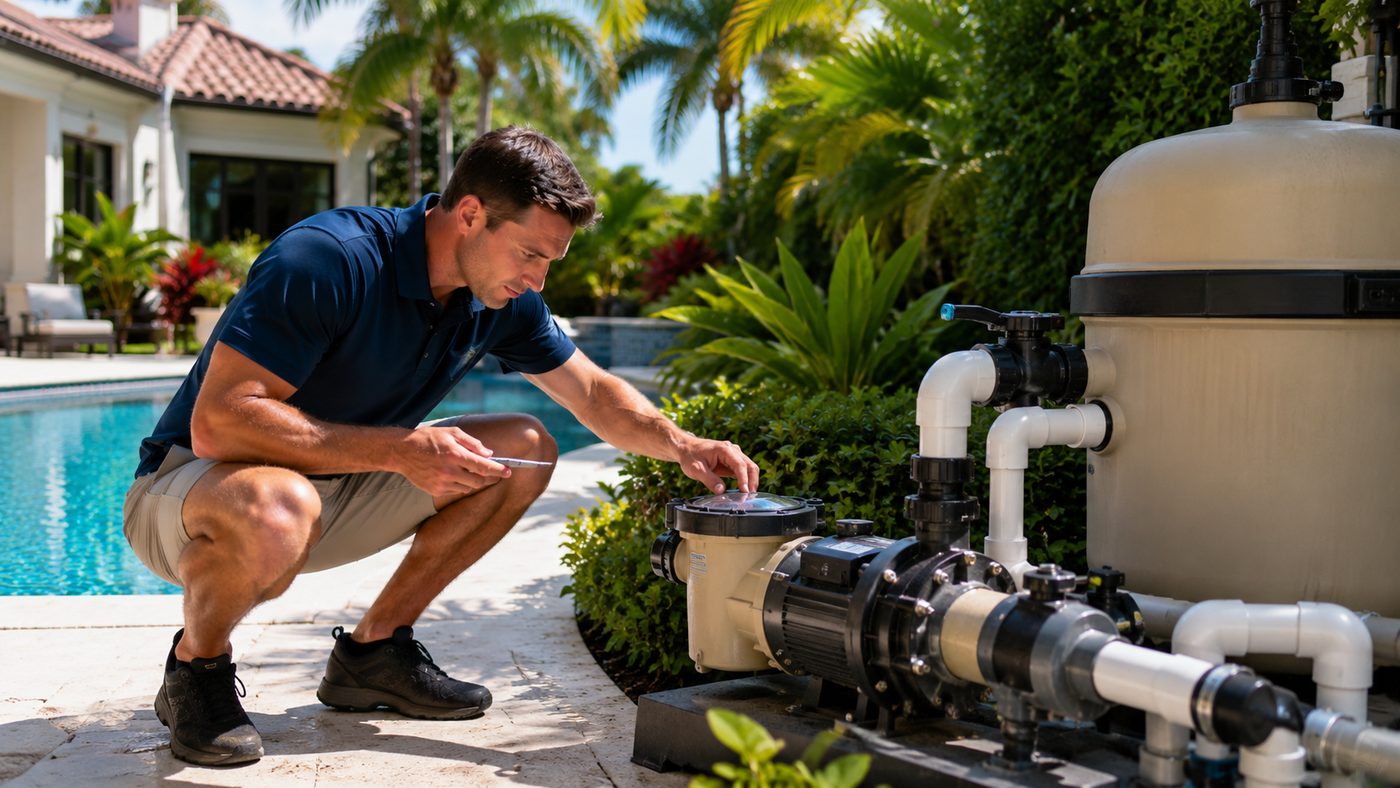
- Pump, filter, and heater connections at the equipment pad
- Light niches and other penetrations in the pool shell
- Plumbing lines that may run underground
- Tile lines and surface cracks that can allow water to escape
If your pool is older, the chance of wear-related issues may be higher. Even well-maintained pools can develop leaks over time, especially when seals, fittings, or plumbing components begin to age.
What homeowners can check before calling for leak detection
Before you schedule service, there are a few simple checks that can help you gather useful information. These steps will not replace professional leak detection, but they can give you a better sense of what is happening.
1. Watch the water level for a few days
Mark the waterline and see how much it drops over 24 to 48 hours. Try to note the weather, wind, and pool use during that time. A consistent drop is more concerning than a one-time change.
2. Inspect the equipment pad
Look for standing water, damp soil, or drips around the pump, filter, heater, and valves. Small leaks at the equipment pad can waste water and reduce system performance.
3. Check for visible cracks or loose fittings
Carefully inspect the tile line, skimmer area, and return jets. If you see damage or movement around fittings, make a note of it.
4. Pay attention to the pool’s behavior
If the pool is harder to keep balanced, if the pump seems to lose prime, or if the water level changes more quickly after the system runs, those details may help narrow down the issue.
These observations can be helpful when you speak with a pool professional. The more detail you can provide, the easier it is to determine whether the issue is likely evaporation, plumbing, or a structural concern.
When to call a professional in Boca Raton
If your pool is losing water faster than expected and the cause is not clear, it is a good time to call for help. A professional can inspect the pool system, review the symptoms, and recommend the next step. That may include leak detection, equipment repair, or routine service depending on what is found.
You should especially consider calling if:
- The water level keeps dropping even after you rule out obvious evaporation
- You notice wet areas near the pool or equipment
- The pump is pulling in air or losing prime
- Your water chemistry is becoming difficult to maintain
- You suspect a plumbing or shell issue but cannot locate it yourself
For Boca Raton homeowners, quick attention matters because a small leak can become a bigger maintenance issue over time. Addressing the concern early may help protect your pool system and reduce unnecessary water loss.
Local pool care matters in Boca Raton and nearby South Florida areas
Pool ownership in Boca Raton comes with unique local conditions. Strong sun, seasonal storms, and year-round use all put pressure on pool systems. That is why homeowners in this area benefit from regular inspections and prompt service when something seems off.
Whether you manage a backyard pool for your family or maintain a property that needs consistent presentation, staying ahead of water loss helps keep the pool looking and operating the way it should. If you are unsure whether you are dealing with evaporation or a leak, a local pool professional can help you sort through the signs and decide what to do next.
To learn more about our pool care options, visit our services page. If you are ready to request help, you can also reach out through our contact page.
Call Boca Pool Servicing for pool service requests
If you are noticing pool leak signs Boca Raton homeowners should not ignore, call Boca Pool Servicing at 561-699-9800. We help with pool service requests in Boca Raton, Delray Beach, and nearby South Florida areas. If your pool is losing water and you want a professional opinion, our team is ready to help you take the next step.
Want help keeping your pool clear, safe, and ready to use?
Request Boca Raton pool service help for weekly cleaning, green pool recovery, vacation-home care, equipment concerns, or renovation conversations.