How Rain Affects Pool Chemistry in South Florida
In Boca Raton, rain is part of pool ownership, especially during storm season and the hot, humid months when afternoon showers can roll in fast. While a little rain may not seem like a big deal, repeated rainfall can change your pool water chemistry, dilute sanitizers, stir up debris, and create the right conditions for algae growth. For Boca Raton pool owners, understanding how rain affects a pool can help prevent cloudy water, staining, equipment strain, and bigger cleanup later.
At Boca Pool Servicing, we often remind homeowners that rain does more than add water to the pool. It can affect pH, chlorine levels, total alkalinity, calcium hardness, and water balance in general. It can also introduce contaminants from roofs, patios, trees, gutters, and windblown debris. If your pool is exposed to frequent rain, a consistent care routine is one of the best ways to protect water quality and keep your pool ready to use.
Why Rain Changes Pool Chemistry
Rainwater is not chemically neutral once it lands in your pool. It can lower sanitizer levels, shift the pH, and change the overall balance of the water. In South Florida, rain often comes with dust, pollen, organic debris, and runoff that can all impact your pool.
Here are the main ways rain can affect your water:
- Dilution of chlorine or other sanitizers: Heavy rain can reduce the effectiveness of your pool sanitizer by adding fresh water and lowering the concentration.
- pH changes: Rain can be slightly acidic, which may push pool water chemistry out of balance.
- Debris and organic load: Leaves, dirt, pollen, and other material can enter the pool and increase the demand on your sanitizer.
- Runoff contamination: Water flowing from decks, landscaping, or nearby surfaces can carry contaminants into the pool.
- Water level rise: If the pool fills too high, circulation and skimming can become less effective.
Common Water Chemistry Issues After Rain
After a heavy rain, Boca Raton pool owners may notice that the water looks different or tests differently than it did the day before. Some of the most common issues include:
Low Chlorine Levels
Rainwater can dilute chlorine, making it harder to keep the pool sanitized. If sanitizer drops too low, algae and bacteria can begin to grow quickly, especially in warm South Florida conditions.
pH Imbalance
Rain can cause pH to drift lower, which may make the water more acidic. Low pH can be uncomfortable for swimmers and may also be rough on pool surfaces and equipment over time. In some cases, added debris or pool chemicals used after a storm can shift pH in the opposite direction, so testing matters.
Cloudy Water
Cloudiness after rain often happens when fine particles are suspended in the water or when filtration and sanitation are not keeping up with the extra load. Cloudy water should not be ignored, because it can be an early sign of a chemistry imbalance.
Algae Risk
Warm water, sunlight, debris, and lower sanitizer levels can create ideal algae conditions. Even if the pool still looks clear, a chemistry drop after rain can allow algae to start forming on walls, steps, or shaded areas.
Storm Season Concerns for Boca Raton Pools
South Florida storm season brings more than rain. Strong wind, lightning, power interruptions, and falling debris can all affect your pool. During and after a storm, it is common to see:
- Leaves and branches in the pool
- Overflowing skimmers or raised water levels
- Reduced circulation if power was interrupted
- Dirty filters from extra debris
- Cloudy or discolored water
If the pump was off for several hours, sanitizer may not be distributed evenly, and the water may need to be checked before swimmers return. This is one reason routine pool maintenance in Boca Raton is so important during rainy months. Frequent inspections help catch issues before they turn into algae blooms or equipment problems.
What Homeowners Can Do After Rain
There are several practical steps Boca Raton pool owners can take after a rainstorm to help keep the water balanced and clear.
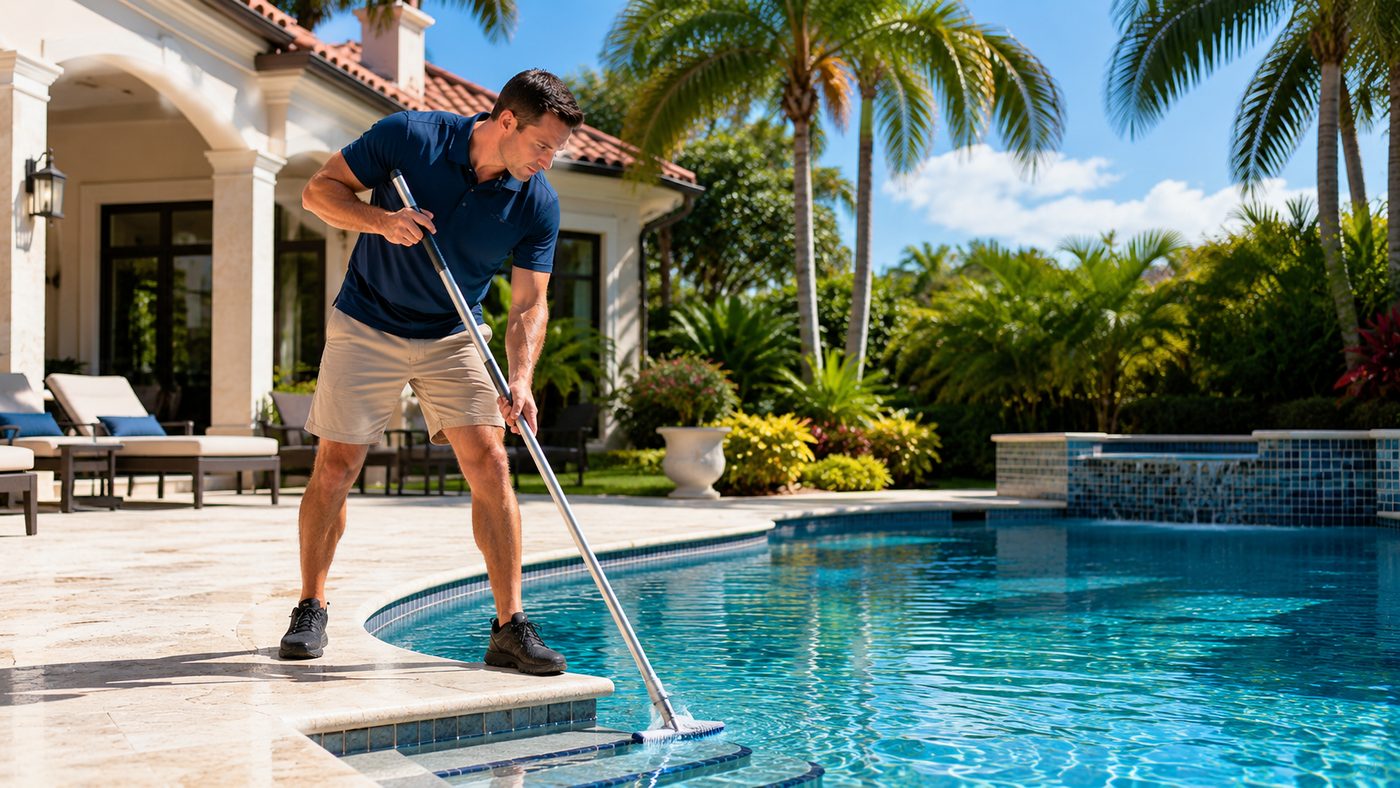
1. Remove Debris Quickly
Skim the surface, empty baskets, and clear any visible leaves or organic material from the pool and surrounding area. The longer debris sits in the water, the more it can affect chemistry and stain surfaces.
2. Check the Water Level
If the pool is too full, skimming and circulation may be less effective. If needed, lower the water to the proper level so the skimmer can work correctly.
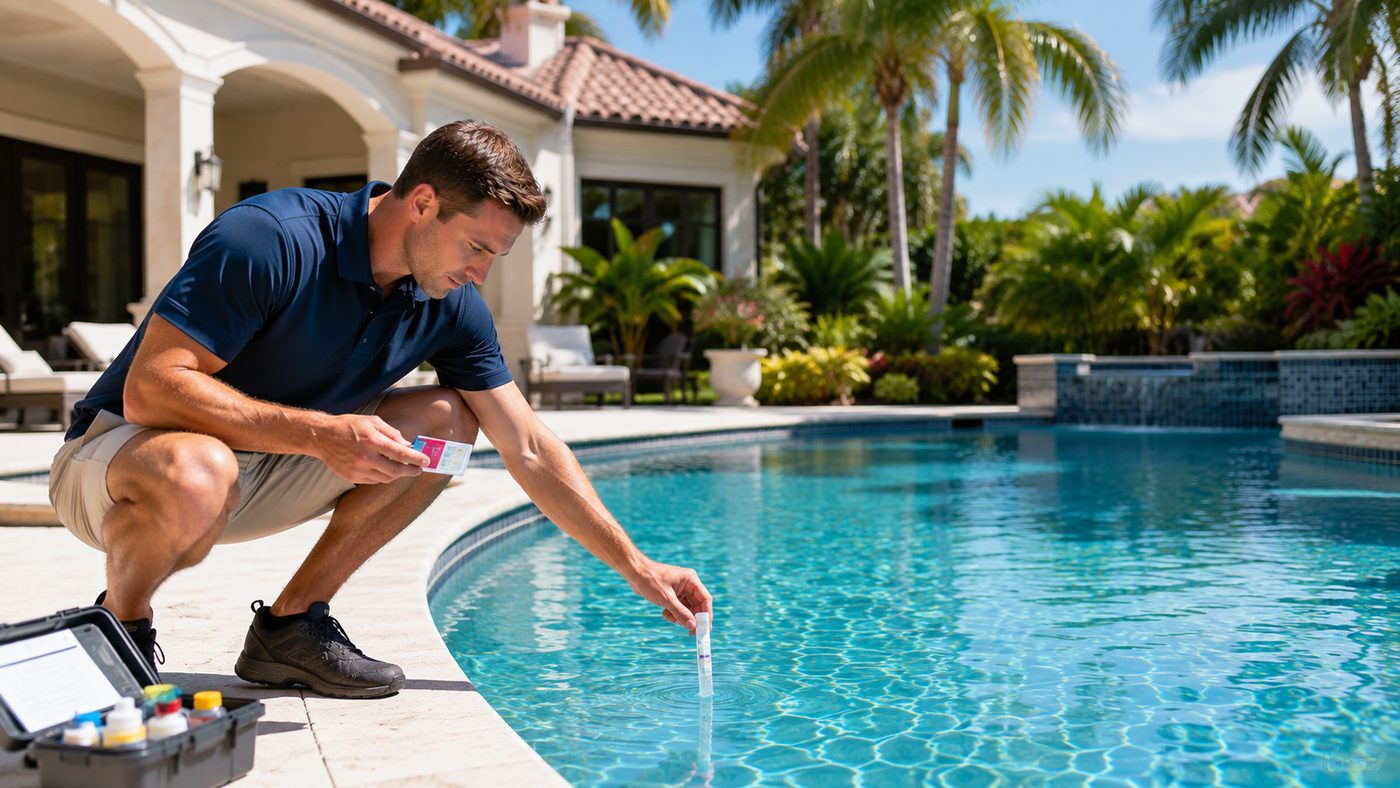
3. Test the Water
Rain can change the balance quickly, so testing after a storm is a smart habit. Focus on chlorine, pH, alkalinity, and, when needed, calcium hardness. If your test results are far from normal, adjustments may be needed before the pool is safe and comfortable.
4. Run the Pump and Circulation System
Good circulation helps distribute chemicals and clear out suspended particles. After heavy rain, running the pump longer can help the filtration system do its job.
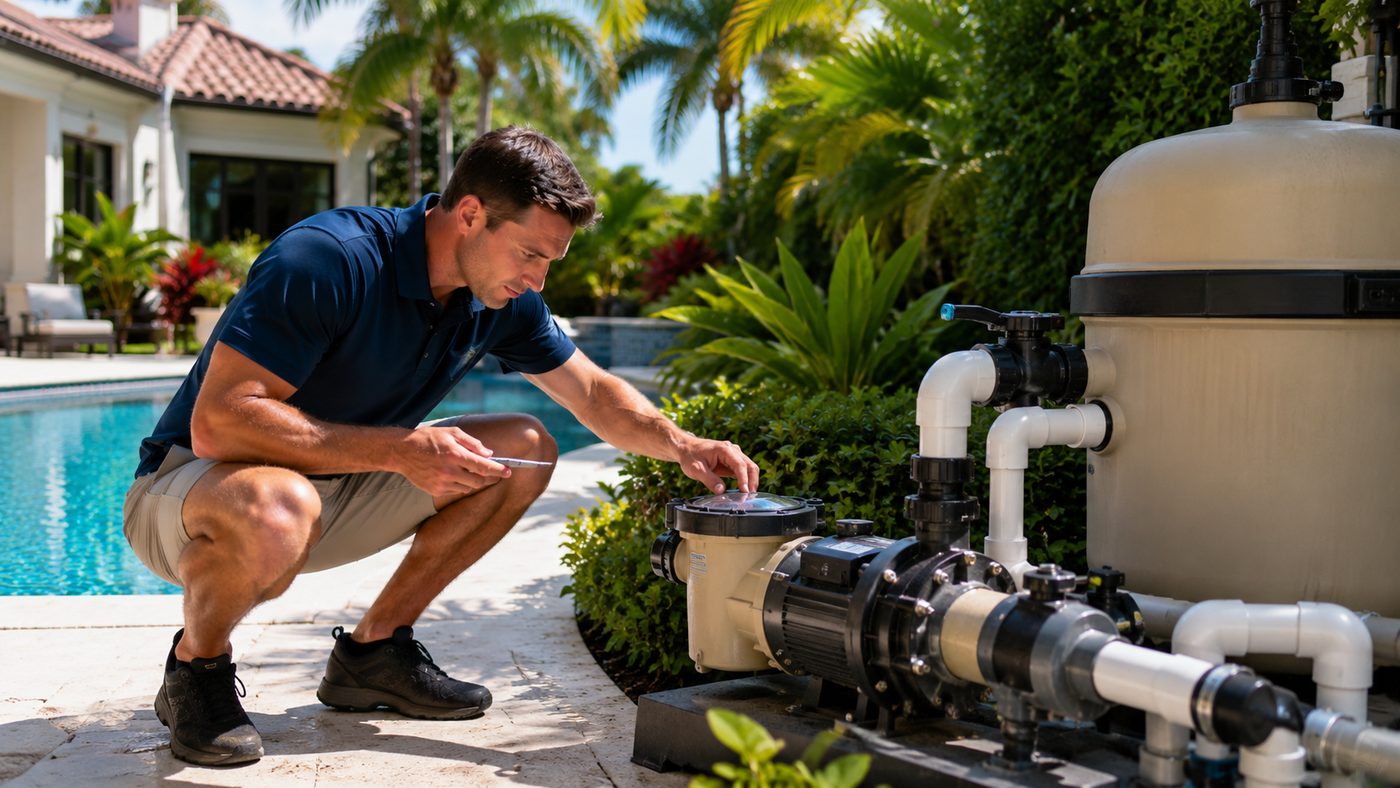
5. Inspect the Filter
Extra debris can clog filters faster than usual. A dirty filter reduces circulation and can make cloudy water worse. If pressure rises or water flow seems weak, the filter may need attention.
6. Watch for Early Algae Signs
Green tint, slippery surfaces, or dull water can all be early signs of algae. Addressing the issue early is much easier than treating a full bloom.
How Rain Impacts Pool Equipment
Rain does not only affect the water. It can also affect the equipment that keeps your pool clean and moving. In South Florida, pool systems may be exposed to wind-driven rain, flooding in low areas, and heavy use during the rainy season.
Potential equipment concerns include:
- Tripped breakers or electrical interruptions: Storms can shut down the pump, timer, or automation system.
- Clogged skimmer and pump baskets: Leaves and debris can strain circulation.
- Filter overload: A dirty filter can reduce water clarity and stress the system.
- Waterlogged surroundings: Saturated soil or drainage issues can affect equipment pads and nearby components.
If your system was exposed to flooding, unusual noises, repeated shutdowns, or low water flow after rain, it is a good idea to have it checked by a professional. Catching equipment issues early can help prevent larger repairs later.
Why Weekly Service Helps in Rainy Weather
Because South Florida weather can change quickly, weekly service is especially valuable for Boca Raton pool owners. A consistent maintenance schedule helps keep chemistry stable even when rain, heat, and debris put extra stress on the pool.
Weekly service can help with:
- Regular water testing and balancing
- Debris removal before it breaks down in the water
- Filter and equipment inspections
- Early detection of algae or cloudiness
- Better circulation and sanitizer performance
If you are trying to stay ahead of seasonal weather shifts, working with a reliable Boca Raton pool service can make a real difference. A professional maintenance routine gives your pool a better chance to stay clean, balanced, and ready to use after summer storms or heavy rainfall.
When to Call a Professional
Some rain-related issues can be handled by homeowners, but others need professional attention. Call for help if:
- The water remains cloudy after you clean and test it
- Algae keeps returning after treatment
- Chemistry levels are difficult to keep balanced
- The pump or filter is not working properly after a storm
- The pool overflowed or was exposed to significant debris
- You are unsure how to restore water balance safely
Professional pool maintenance in Boca Raton can be especially helpful during storm season, when frequent rain makes it harder to keep up with testing, cleaning, and equipment care.
Helpful Tips for Boca Raton Pool Owners
- Test water more often during rainy weeks.
- Keep gutters, drains, and nearby landscaping clear to reduce runoff.
- Maintain proper circulation so chemicals can move through the pool evenly.
- Do not ignore small changes in water clarity or color.
- Stay consistent with service, especially during summer and hurricane season.
FAQ
Does rainwater ruin pool chemistry?
Rain does not ruin pool chemistry by itself, but it can change sanitizer levels, pH, and water balance enough to create problems if the pool is not checked afterward.
Should I add chlorine after it rains?
Not always. It depends on your test results. The best approach is to test the water first and then adjust chemicals based on what the pool actually needs.
Why does my pool turn cloudy after rain?
Cloudiness often comes from debris, diluted sanitizer, or filtration that is not keeping up with the extra load. Testing and cleaning the pool soon after rain can help clear it up.
Can rain cause algae in my pool?
Yes. Rain can lower sanitizer levels and add nutrients that algae feed on, especially in warm weather. Fast cleanup and proper chemical balance help reduce the risk.
How often should Boca Raton pool owners test the water during storm season?
Testing once a week is common for many pools, but after heavy rain or a storm, it is smart to test sooner so you can catch changes before they lead to bigger issues.
Keep Your Pool Balanced After the Rain
Rain is part of life in South Florida, but it does not have to turn into a pool problem. With the right maintenance routine, Boca Raton homeowners can stay ahead of water chemistry changes, algae growth, and equipment strain. If your pool needs extra attention after storms or you want dependable weekly service, Boca Pool Servicing is here to help.
Call 561-699-9800 to learn more about our Boca Raton pool service and how we help homeowners keep their pools clean, balanced, and ready for the next swim.
Want help keeping your pool clear, safe, and ready to use?
Request Boca Raton pool service help for weekly cleaning, green pool recovery, vacation-home care, equipment concerns, or renovation conversations.